Design & Inspiration
How the Right Flooring Can Make a Small Room Feel Bigger
Light colours, a continuous finish and thoughtful plank layouts can help even a compact room feel more open. Explore five practical ideas for your home.
A compact living room, narrow hallway or cosy bedroom does not need to feel cramped. Although a new floor cannot change a room's dimensions, its colour, pattern and layout can change how we perceive the space. The right finish can bring a sense of calm, help daylight work harder and create a more open atmosphere.
When choosing flooring for small rooms, look beyond an individual sample. Consider the whole room: its natural light, furniture, adjoining spaces and the demands of everyday life. These five ideas offer a practical starting point for UK homeowners.
1. Choose lighter flooring colours
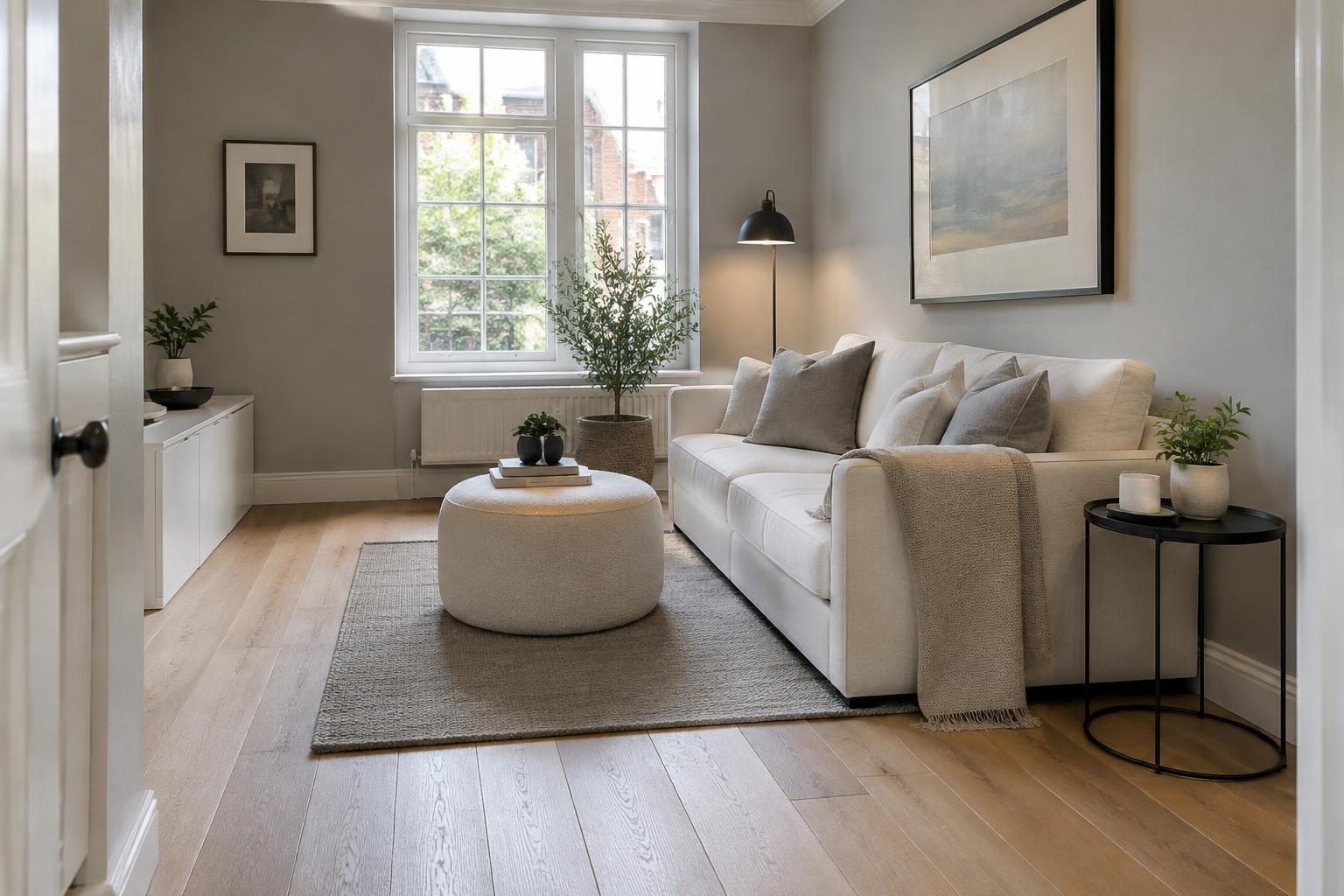
Pale oak tones, soft greys and light neutral finishes can help a small room look brighter, particularly alongside lighter walls. A gentle contrast between floor, skirting and walls keeps the eye moving rather than emphasising every boundary.
Try samples in your own room in daylight and under evening lighting. A cool grey that looks fresh in a sunny showroom may feel quite different in a north-facing home. Natural-looking light oak is a useful starting point, but the best shade is the one that works with your furniture and lighting.
2. Keep flooring consistent between connected rooms
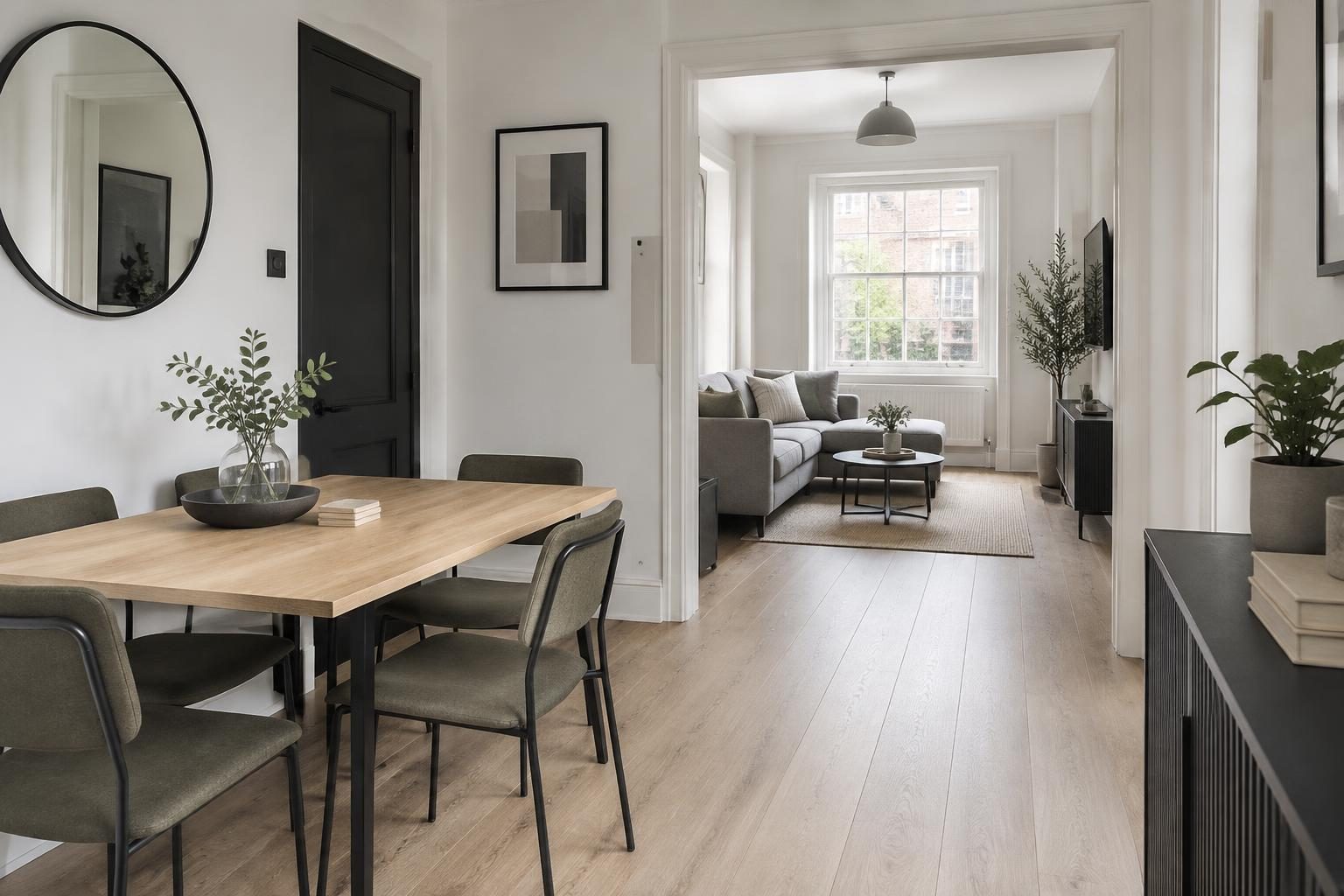
Using the same flooring or a closely matched tone in adjoining spaces can create visual continuity. In a small living room connected to a dining area, a consistent finish helps the two spaces read as part of a larger whole rather than separate patches.
Continuity should never come at the expense of correct fitting. Some products require expansion gaps and doorway profiles, while kitchens and bathrooms may need a different moisture specification. Where a transition is necessary, choose a neat, complementary door bar rather than forcing an uninterrupted installation.
3. Choose the right direction for floorboards
Straight planks create lines that guide the eye. Running boards along a room's longer dimension can emphasise its length; laying them across a narrow room may draw attention to its width. Neither approach is a universal rule, so compare both against the main doorway, windows and furniture arrangement.
Before committing, lay a few sample boards in different directions or sketch the layout. The existing subfloor, product instructions and joins between rooms also influence the final installation. A considered layout should look balanced and be suitable for the flooring system, not simply follow a design trend.
4. Avoid overly busy patterns
High-contrast grains, strongly outlined joints and multiple competing finishes can make a compact room feel visually crowded. A quieter wood effect or softly textured plain finish gives furniture and architectural details room to breathe.
Patterned floors are not off limits in small spaces. If you love a statement design, keep the rest of the room restrained and assess a larger sample area before ordering. Think about the scale of the pattern and how many repeats will be visible around your furniture.
5. Select flooring that suits your lifestyle
A floor should work as well as it looks. For a busy living room, consider a laminate with a suitable wear rating and follow the manufacturer's care guidance. Vinyl may suit rooms where easy cleaning and resistance to everyday splashes matter, but always check the exact product's moisture and slip requirements.
For a small bedroom, a light, softly textured carpet can offer a calm appearance and comfort underfoot. If you have pets, children or underfloor heating, discuss those needs before choosing. Include fitting, underlay where required, doorway trims and any preparation in your budget so the finished result is practical as well as attractive.
Make the most of your space
Talk to New Flooring about colours, finishes and fitting for your home. Request a free quote for a floor that suits your room and your everyday life.